
HELENA – Montana Fish, Wildlife & Parks game wardens are wrapping up details from the 2025 hunting and fishing seasons, and while the numbers of poaching cases varied from region to region as compared to previous years, statewide FWP saw an uptick in TIPMONT reports.
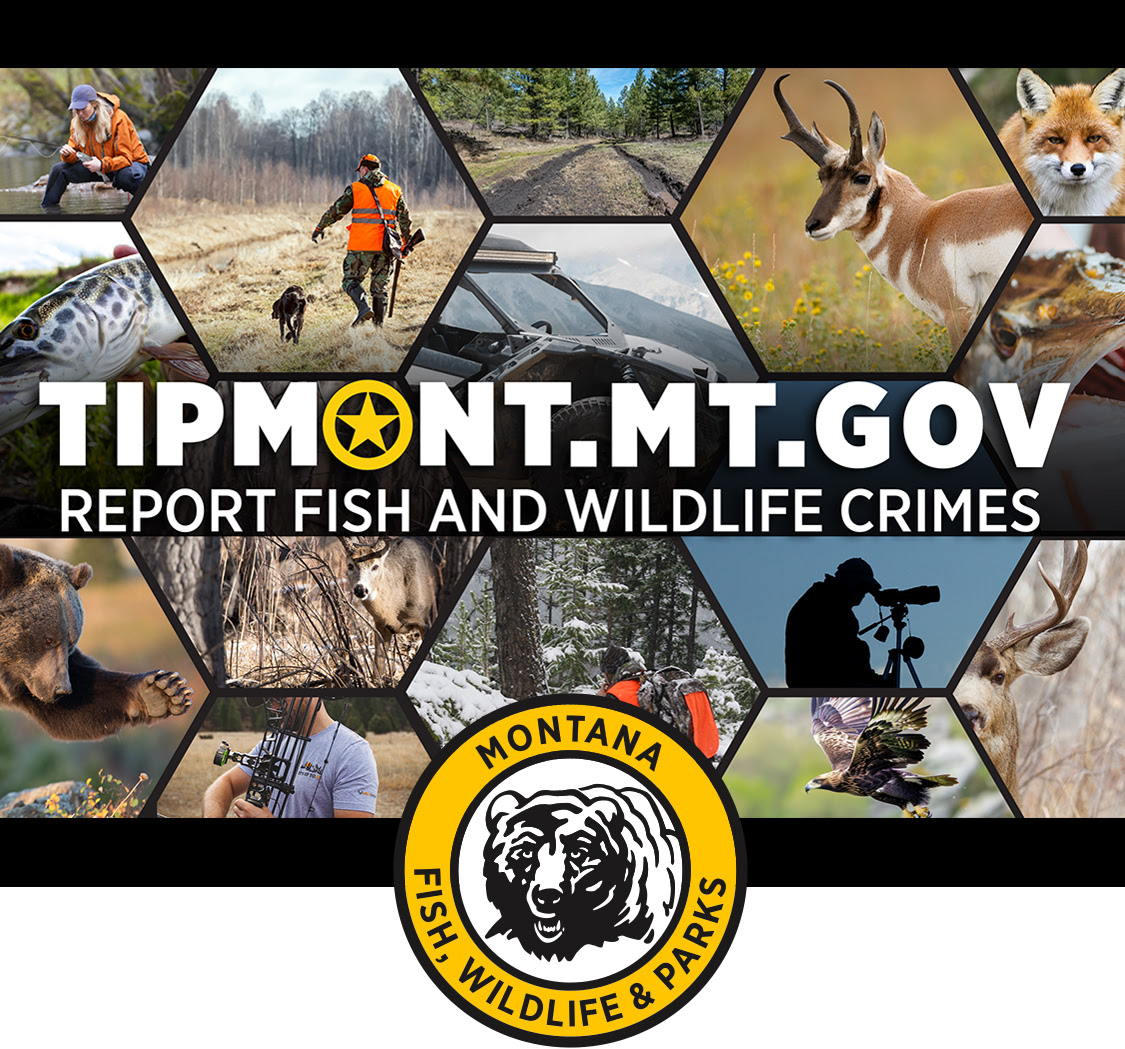
TIPMONT is a program that encourages the public to report poaching crimes. Poaching includes a variety of crimes including illegal shed hunting, vandalism, littering, cultural resource theft and other resource crimes. Anyone who reports a crime could be eligible for a cash reward of up to $1,000.
“By reporting poaching, individuals contribute to the conservation of endangered species and the overall health of natural habitats,” said FWP Operation Sergeant and TIPMONT Coordinator Brooke Shelley.
The TIPMONT Board met recently to review TIPMONT reports. This five-member board determines reward payouts to informants who provide information that results in convictions.
For 2025, the board approved the following:
- $28,100 in reward money issued to the public
- $48,553 in total fines for the defendants in the cases presented to the board
- 66 years loss of hunting/fishing/trapping privileges for the defendants
- 153 total charges in these cases
- $71,010 in restitution the defendants have been ordered to pay
These numbers are significantly higher than they were for the 2024 season, when there were 83 total charges and $37,250 in restitution. But that is partly due to the time of year of the TIPMONT board meeting, Brooke explained. For the 2024 season, the meeting was held in July when funds for the program were renewed. For 2025, the Enforcement Division was going through a recruitment process in July and, at that point, decided to hold the meeting until after the 2025 hunting season.
“If we break it down by year though, we definitely had more and bigger cases submitted for the 2025 hunting season,” Brooke said.
Here is breakdown of what game wardens from around the state experienced during the 2025 season:
Region 1 – Northwest Montana
In northwest Montana, Game Warden Captain Chris Neu highlighted a couple of poaching cases in the region.
“Two men have been charged with one felony and multiple misdemeanors each in Flathead County following a lengthy investigation by wardens,” Neu said. “One of the men has also been charged with several misdemeanors in Sanders County.”
Wardens were called when a Creston area resident saw spotlights and heard shots in the surrounding fields late at night. Flathead County deputies arrived first and initiated a pursuit with a suspect vehicle. After deputies detained the suspects, wardens arrived and collected evidence from the vehicle and suspects.
The investigation that followed determined that the duo killed five white-tailed deer that night. They removed the heads from some of the deer and left the others intact. The investigation also uncovered several deer killed in both Lake and Flathead counties over the previous months.
Additionally, investigators located a black bear sow and cub that had been killed and left to waste in Sanders County.
Charges have been filed by the counties, but appearances have not yet occurred.
Region 2 – Western Montana
In western Montana, Warden Captain Kyle Miller reported that the 2025 hunting season was similar to previous seasons.
“One thing we did notice was an uptick in hunters who hadn’t thoroughly read the regulations, before they went out hunting, and because of that mistakes were made.” Miller said.
This included hunters who didn’t draw the correct permit to hunt in a certain area that required a permit.
“We also saw hunters not reading the ‘Opportunity Specific Details and/or Restrictions’ box in the regulations, which restricts who may harvest an animal or where that animal may be harvested,” Miller added.
This resulted in animals being harvested on public land when the opportunity was restricted to private land only.
“It was mostly resident hunters,” Miller said.
Region 3 – Southwest Montana
Josh Leonard, game warden captain in southwest Montana, said weather impacted the hunting season in the region.
“We did not see animals on the landscape like we typically do, with some cold and snow,” Leonard said. “Elk herds that keep places like Townsend and Ennis busy were slower because of the weather conditions.”
Hunters calling in their own mistakes were frequent in the region, he said. Examples included an elk hunter who shot a cow moose, hunters accidentally exceeding limits and recognition of shooting an animal that was not authorized in a hunting district.
“The TIPMONT reports were also top-notch in my opinion,” Leonard said. “I can honestly say some of the eyewitness details we received on some cases were exceptional – exceptional enough that all we had to do was arrive and the case was made.”
Leornard said the details provided included videos, photos, GPS points and accurate vehicle information.
“It was really encouraging to see,” he said.
Region 4 – Central Montana
David Holland, warden captain in north-central Montana, said the region’s wardens experienced a typical hunting season when it came to responding to hunting violations.
“The most common violations we encountered involved hunting without landowner permission, waste of game, over limits and tagging violations,” he said.
Wardens in the region also issued citations for deer hunters who harvested deer in a permit without a permit and cases involving closed seasons.
“One of the more interesting things that game wardens encountered was the illegal harvest of mountain lions during the falls season,” he said.
Of the five lions killed in Region 4 during the fall season, three were taken illegally. The three illegal lions were killed by people who did not have a valid Mountain Lion License at the time of harvest.
“All three of the subjects purchased their licenses after the harvest,” he said.
Region 5 – Southcentral Montana
The southcentral Montana enforcement team reports that last year’s hunting season harvest success and violation rate was at or below normal. The overall call volume was also reported to be at or lower than normal.
Wardens handled numerous violations involving hunting without landowner permission. Many of these calls also involved hunters attempting to retrieve game on private land without first obtaining landowner permission. Hunting without landowner permission is one of the most common violations encountered by wardens across the state every fall.
Region 5 wardens noted that the number of violations involving deer and antelope hunting was lower than it has been in the past. However, with increasing numbers of elk in southcentral Montana, wardens are seeing an increase in the number of violations involving elk hunting. In many parts of the region, the mild weather kept elk at higher elevations and overall success was lower.
“Wardens observed that they handled more overlimit cases this fall than they have in the past,” said Game Warden Sergeant Derek Fagone. “Many of these cases resulted from ‘shoot outs’ involving large herds of elk moving across the landscape.
Region 5 wardens made number of good cases this fall including one involving a hunter killed four deer while their hunting privileges were revoked. Park County wardens investigated a closed-season spotlighting case in September on a bull elk and whitetail buck that were also wasted. One of the two suspects has already pleaded guilty to charges and was given the following: fines- $1,635, restitution-$1,300 and 36 months revocation of privileges. revocation. The second suspect is set to appear later this month.
“On a positive note, the number of calls reporting shooting from the road and shooting from a vehicle were considerably lower than past years,” Fagone said.
Region 6 – Northeast Montana
From northeast Montana, Game Warden Captain Shane Reno reports that hunting violations in the region were slightly below average this year. In particular, violations such as shooting from the road and hunting without landowner permission were down.
“This is likely due to due a drop in the population of deer in the region,” Reno said. “Mule deer numbers are trending down, and whitetail experienced a bout with EHD (epizootic hemorrhagic disease) early this past fall.”
“The unlawful use of licenses is becoming a more concerning issue every year it seems especially now with nonresident license opportunities becoming more limited,” Reno said.
Wardens routinely worked on traditional residency-type cases, where ineligible nonresident hunters purchase a resident license, he said.
One case this past fall involved a hunter who shot and killed two bull elk in a limited-draw permit area. In another example, hunters who could not get over-the-counter B Licenses for whitetail deer in the area they typically hunt, purchased available licenses in another part of the state with the intention of using them in Region 6, Reno said. Citations were issued, and the deer were seized.
Region 7 – Eastern Montana
Southeast Montana Warden Captain Justin Feddes reports that the 2025 hunting season was noticeably busier than previous years, especially in areas where deer populations have started to recover.
“Word began to spread about specific areas of the Region where hunters were seeing better deer numbers. Subsequent groups of hunters then focused on these areas, especially later in the season, resulting in an uptick in violations and reports,” Feddes said.
Citations and warnings issued by Region 7 game wardens in 2025 increased considerably from the 2023 and 2024 hunting seasons with the primary violations including hunting without landowner permission and tagging issues. Less prevalent violations included the harvest of mule deer does on public land and wrong district violations related to the splitting of the Region 7 antelope district in 2024.
“The Montana Legislature and Fish and Wildlife Commission occasionally change laws and regulations related to legal chase of game animals,” Feddes added. “Game wardens primarily focus on educating hunters when these changes occur, but it is the ultimate responsibility of the hunter to know the rules and regulations before they head into the field.”